2024

2024. January 6.

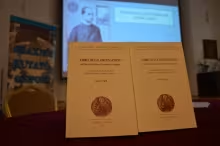
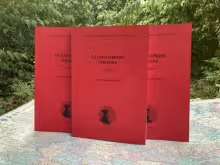
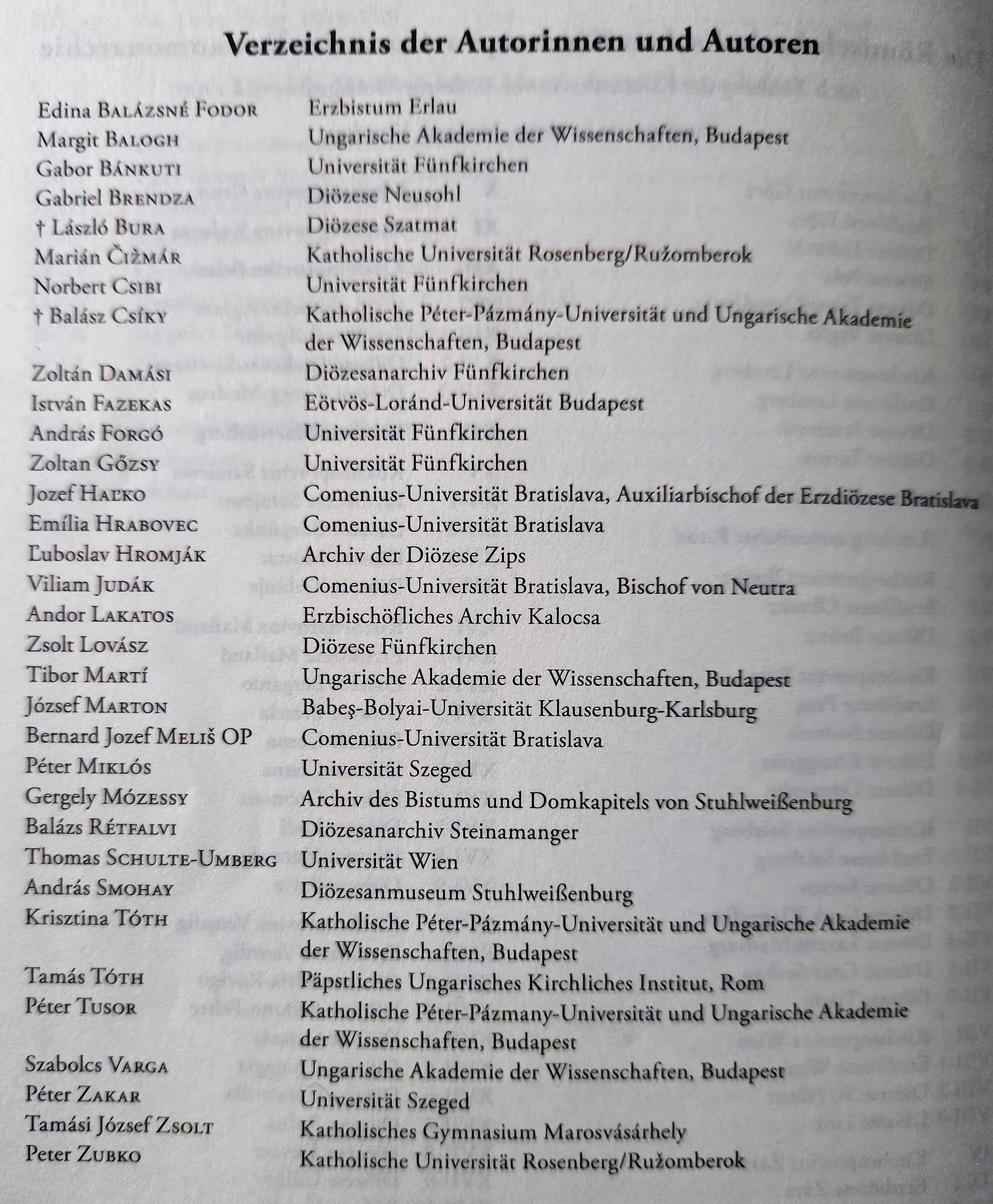
The 'Bishop's Lexicon 1804–1918', the first phase of the Fraknói Research Group's extensive project spanning multiple grant cycles, concluded on Pentecost in 2020. The results of the comprehensive international collaboration are encompassed in the impressive volume published by Duncker & Humblot in Berlin: Die Bischöfe der Donuaumonarchie 1804 bis 1918. Ein amtsbiographisches Lexikon, Herausgegeben von Rupert Klieber, Band I: Die röm.-kath. Kirchenprovinzen Gran, Kalocsa, Erlau im Königreich Ungarn, unter Mitarbeit von Péter Tusor, Duncker & Humblot, Berlin 2020 (xviii + 661 p). Further details and the international dimensions of the research: here, presentations in BudapestRome, Vienna. In exploring the 'long 19th century', the Research Group focused on diocesan histories that also encompass foundational research from the Vatican. The project itself has Roman origins, built upon the archival cooperation between the initiating Campo Santo Teutonico rector, Erwin Gatz († 2011), and the editor-in-chief, Rupert Klieber.

The second phase, the Hungarian-language version ('Püspöklexikon 1804–1918'), concluded its main work by Christmas 2023. This edition represents an improved and expanded version. Following the original concept, it includes the ordinaries of the Greek Catholic eparchies in Hungary (which are expected to be separately featured in an 'imperial' volume in the German version). While in the German edition, Rupert Klieber was the ultima manus, here the authors themselves are responsible for the entries. Therefore, the completeness of the research project and its results can only be assessed and interpreted in consideration of the Hungarian edition. During the editing process, Professor Klieber, along with his colleagues, extensively reworked, standardized, and expanded the entries using new archival and printed sources, as well as German academic data. In most cases, Hungarian authors and editors worked further using this material translated back into Hungarian by Zsófia Szirtes. The results of Professor Klieber's approach have been generally retained. In some biographies, the original positions of the authors have been more strongly emphasized. The authors are solely responsible for the entries in the Hungarian edition. Concerning the descriptions of the dioceses, we directly quote Professor Klieber's distinguishable statistical analyses from the German edition. This two-step research concept evolved interactively between Vienna and Budapest during the almost 'longue durée' project, and it was finalized in 2018–2019. The updating of the entries was significantly prompted by the extensive time span of the research before the Hungarian edition. (For details on the textual work, Zsófia Szirtes, the editor-in-chief of the Hungarian edition, provides information.) The academic data reflects the state of 2023. Inevitable errors in the first German edition were mostly corrected. (The detailed Errata & Corrigenda for the German version will be accessible online after the corrected Hungarian edition is printed.)

In the case of entries authored by Slovak contributors for the dioceses in the Felvidék (territory of present-day Slovakia), at Professor Klieber's suggestion, we have translated the German version and focused only on checking the data and expanding the bibliography. Slovak authors only partially used the Hungarian academic literature, particularly the older sources. Interpretations significantly differing from the perspective of Hungarian historiography will be commented on in the introductions of the online edition, except for the introductions to two dioceses. Despite experiences gained during the international research conducted from 2006 to 2008 and effectively launched in spring 2009, detailed discussions about our distinct and interpreted shared history with Slovak colleagues through Vienna have not yet taken place. It is of great significance that in 2020, on the 100th anniversary of the Trianon tragedy, we managed to ensure, despite certain tendentious and one-sided claims, that Hungarian history is fundamentally present as Hungarian and not as any other history in the prestigious international publication released in Berlin. This goal was achieved through numerous compromises, which inevitably encountered failures in the search process. Such was the case with our request concerning the histories of the Nyitra and Besztercebánya bishoprics. The presentation of the history of these two dioceses remained somewhat one-sided in the German edition. (See point 4 of the editorial documentation dated March 5, 2019, addressed to Vienna, for historiographically intriguing editing details.)

Behind this extensive research are no ERC millions. However, the significance of the results in understanding and comprehending the history of Central Europe has been acknowledged at the highest level by international scholars, from Joachim Bahlcke to Andreas Gottsmann and Thomas Winkelbauer. (Further reviews and presentations can be found here.) Apart from the initial capital provided by Erwin Gatz, this was achieved solely through the  Austrian Science Fund (Österreichisches Wissenschaftsfonds) and the MTA Lendület Program (as well as a fraction of the Fraknói Research Group's budget between 2017 and 2024). Initially, in 2024, the introductory text by the project's most esteemed author, Gábor Adriányi, and individual dioceses will be published separately in e-fascicules. In the case of the latter, the biographies of all bishops of the respective diocese will be available. Following the publication of all e-fascicules, the volume will be released digitally (e-lib.) and in print in 2025. Currently, on Epiphany 2024, alongside Gábor Adriányi's introduction, the entries for SzékesfehérvárGyőr, and Pannonhalma will be made Open Access.

The Hungarian edition is the result of the editorial work by Zsófia Szirtes, Péter Tusor, and Rupert Klieber, with contributions from István Fazekas and András Forgó. The editorial tasks are carried out by Zita Lőrincz. Special thanks go to Margit Balogh for the diocesan introductions and her valuable advice. Adrienne Tengely's meticulous professional editing and augmentation of the entries authored by Slovak contributors, the rewriting of the entries for Eger and Szatmár, and the verification and update of all (!) Greek Catholic entries by Tamás Véghseő are also acknowledged. And gratitude is extended to all authors from Székesfehérvár, Szombathely, Pécs, Szeged, Eger, Nyíregyháza; from Gyulafehérvár, Kolozsvár, Marosvásárhely; from the Felvidék/Slovakia, Transcarpathia; and of course from Vienna and Budapest. Among the authors, Gheorghe Gorun from Nagyvárad, László Bura from Szatmár, and Balázs Csíky, a Bolyai Fellow of the Fraknói Research Group, unfortunately did not live to see the completion of the Bishop's Lexicon.

The Bishop's Lexicon 1804–1918 marks the beginning of the millennial historical dimension project of the Fraknói Research Group, the Moravcsik Gyula Institute, and the Collegium Professorum Hungarorum. Following the example of the German research spearheaded by Erwin Gatz, a lexicon of Hungarian bishops from 1001 to 1993 will be prepared. The planned volumes include: Bishop's Lexicon 1918–1993; Bishop's Lexicon 1711–1804; Bishop's Lexicon 1605–1711;1526–1605, Bishop's Lexicon 1458–1526; Bishop's Lexicon 1302–1458; Bishop's Lexicon 1001–1302. In anticipation of the Mohács anniversary, the manuscript of the lexicon of the Hunyadi–Jagelló era is nearing completion. Refer to the  report by editor-in-chief Tamás Fedeles for details on this and the entire project.
2024. January 26.

After Péter Tusor's lecture on the Árpás Altarpiece in Győr, the 6th Fraknói Workshop took place on January 23, 2024. During this event, Gábor Nemes presented the results of his research supported by the Bolyai Scholarship of the Hungarian Academy of Sciences, focusing on the medieval account book of the Győr Cathedral Chapter.

Gábor Nemes began his presentation by providing an overview of the historiography and research history of the medieval account book of the Győr Cathedral Chapter. Following this, he aimed to illustrate the incredible research opportunities hidden in the source by addressing two specific topics. Firstly, he analyzed the Abda toll (customs) of the Győr Cathedral Chapter, which was collected on one of the busiest routes in medieval Hungary, connecting Győr and Vienna. He first introduced the property structure and management of the Győr Cathedral Chapter, then, based on the medieval account book, demonstrated the annual amount of the Abdai toll and the methodology of toll collection. He compared it with other incomes of the chapter, including the toll on the bridge over the Rába river in Győr, the tolls of the bishop of Győr, and the tolls of the Kanizsai family's estates in Sárvár and Kapu.

Subsequently, by analyzing the surviving register from 1516 of the tithes in Moson – complemented with information from the cathedral chapter's account book – Nemes provided insight into the late medieval economy of the Győr canons.


2024. February 1.

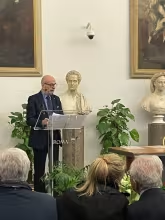
On February 1, 2024, the 2024 lecture series of the Istituto Nazionale di Studi Romani was inaugurated in Rome (Sala Promoteca Campidoglio). On this occasion, Maria Antonietta Visceglia, professor emerita from the University of Rome La Sapienza, delivered her lectio magistralis titled "Nepotismo papale e gender tra Rinascimento e Controriforma."

The opening of the XCVIII Academic Year was conducted by Gaetano Platania, the president of the Istituto Nazionale di Studi Romani and emeritus professor at the University of Viterbo. In his speech, he presented the history of the institute and drew attention to this year's rich program, which can be found on the institute's website. He highlighted the successful collaboration with the Vilmos Fraknói Roman Historical Research Group, emphasizing the upcoming jointly organized international conference titled "PROTAGONISTI E COLLABORATORI, Studiosi provenienti dall’Europa centro-orientale presso gli archivi della Santa Sede tra il 1881 e il 1918." He also mentioned the recent successful conclusion and results of the international symposium "I Collegi per stranieri a Roma 1750-1915."

During her presentation, Maria Antonietta Visceglia discussed the situation of female relatives of popes from the 15th century onwards. She addressed the circumstances of the popes' children, who could not live within the Vatican walls and were often forced into politically motivated marriages to strengthen the power of the church. She provided specific examples from the biographies of Lucrezia di Borgia, Donna Olimpia, Vittoria Farnese, and Maddalena de Medici.
 

2024. February 12.

On February 8, 2024, Róbert Oláh P., a scientific assistant of the Fraknói Research Group, gave a presentation at the annual first meeting of the Intelligence History Section of the Hungarian Military Science Society. The title of his lecture was "Hungarian Ecclesiastical Representatives in Rome, 1607-1783." In his presentation, he showcased the historical development of the Hungarian agency in Rome during the 17th century. Following this, he conducted a detailed analysis of the three-decade-long activities of Ferenc Zichy, the Bishop of Győr (1743-1783), who employed agents in Rome during that period. As a conclusion, he specifically focused on analyzing the news value of letters sent from Rome to Győr during the 1769 conclave. The event took place at the Library of the State Security Archives (Állambiztonsági Levéltár - ÁBTL).

2024. February 13.

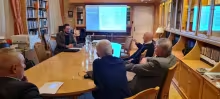
On February 13, 2024, the Fraknói Workshop Lecture took place for the seventh time. At the beginning of the online event, Péter Tusor, the research group leader, greeted the participants, giving special recognition to János Bergmann, titular abbot and the current Grand Provost of the Cathedral Chapter of Kalocsa. Sági György, a scientific assistant of the research group, conducted a life interview with the retired parish priest from Bácsalmás on November 8, 2023, at the Archbishop's Palace in Kalocsa. In his introduction, Sági, similar to the leader of the research group, spoke about the usability of life interviews as oral history sources for historians. The interviewer also mentioned the previous application of this method in his research. The Workshop Lecture concluded with the screening of a segment from the interview. The full film is available on YouTube.


Lecture's ppt is available here

2024. February 23.

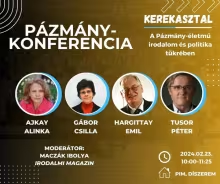
February 23rd saw a roundtable discussion titled "Pázmány-lifework in the Mirror of Literature and Politics" held in the ceremonial hall of the Petőfi Literary Museum. Moderated by Ibolya Maczák, the discussion featured insights from Ajkay Alinka, Csilla Gábor, Emil Hargittay, and Tusor Péter, the leader of the Fraknói Research Group. The content of the discussion and subsequent presentations will be published in the upcoming thematic issue of Magyar Napló Literary Magazine


Program

2024. February 27.

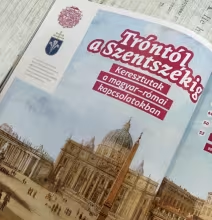
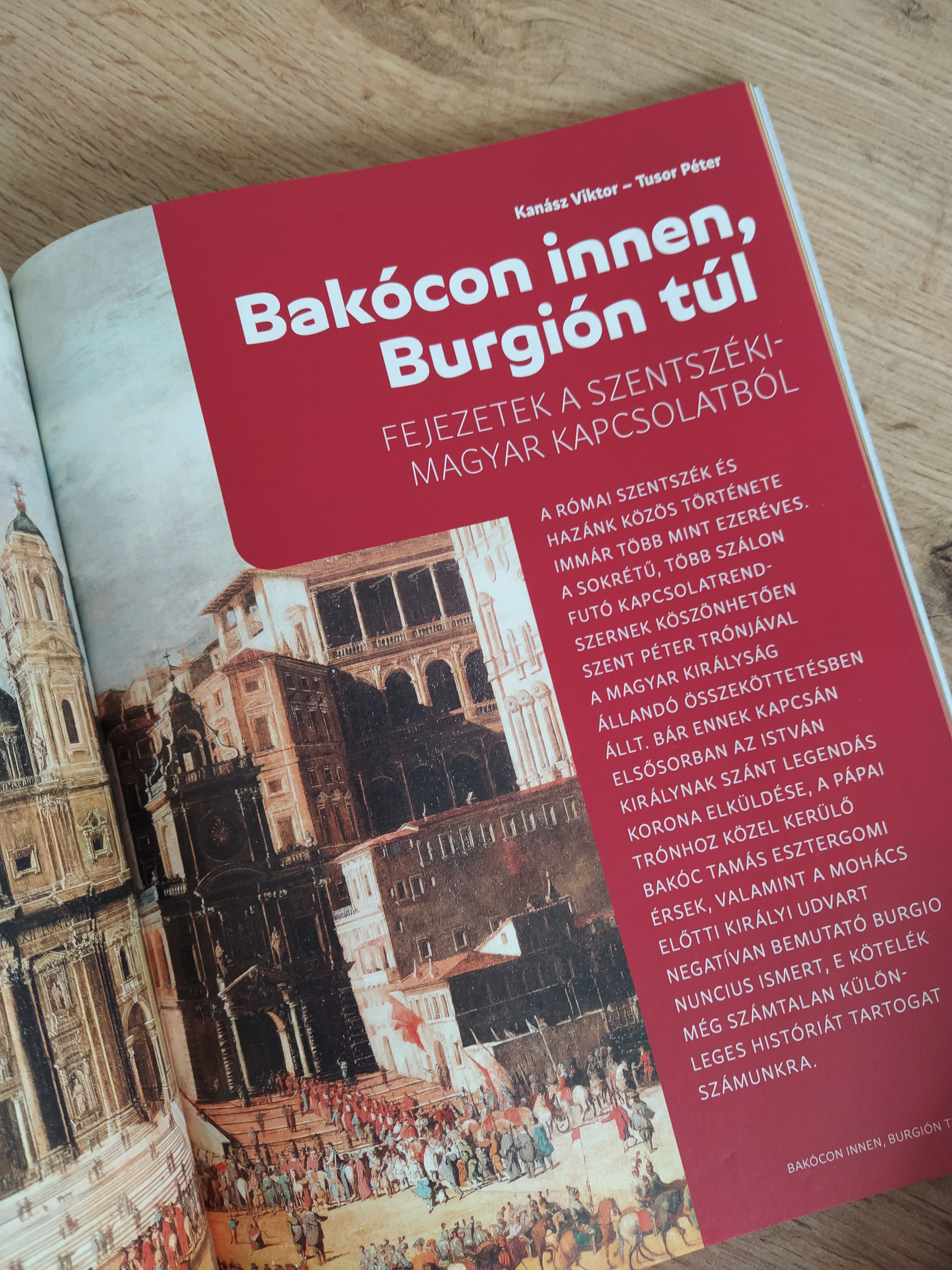
The Fraknói Research Group attaches particular importance to the dissemination of the results of its fundamental scholarly research. In this spirit, during 2023, and on the basis of an agreement concluded with the historical magazine Múlt-kor, members of the Fraknói Research Group published two articles (see here and here).

Owing to the strong interest these publications generated, this initiative subsequently developed into the central thematic focus of the magazine’s spring issue this year. Edited jointly by Péter Tusor and Viktor Kanász, the thematic section features contributions by Péter Tusor, Tamás Fedeles, Gábor Nemes, Tamás Kruppa, Viktor Kanász, György Sági, and Róbert Oláh P. on behalf of the Research Group, exploring the thousand-year history of relations between Hungary and the Holy See.


2024. February 27.

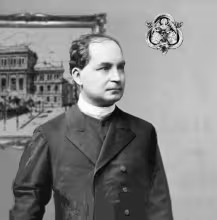
In 2024, we commemorate the 100th anniversary of the death of Vilmos Fraknói, the abbot of Szekszárd and Szentjobb, canon of Nagyvárad, elected bishop of Arbe, secretary, and vice president of the Hungarian Academy of Sciences. The Fraknói Research Group has been preparing for years to pay tribute to the centenary with scientific events and results worthy of its namesake.

On May 2-3, a grand historiographical conference will be held in Nagyvárad in the ceremonial hall of the episcopal palace. On June 6, the Istituto Nazionale di Studi Romani in Rome will host an international symposium initiated and organized by us on the Aventine, where we will analyze Fraknói's and his colleagues' research at the Vatican, involving contemporary actors from Austria, the Czech Republic, Poland, and Croatia. Throughout the Centenary, members of the Research Group will present the latest scientific findings on topics researched by Fraknói in various lectures (see here and here).

Before the day of Fraknói's death, on November 19, we will lay a wreath on his renovated tomb in the Fiumei Road Cemetery. Following this, a memorial event will be held in the ceremonial hall of the Central Seminary, an institution where Fraknói resided during his university years. Here, we will present a volume containing the lectures from the Nagyvárad conference, supplemented with other publications focusing on his biography.

The conclusion of the memorial year will take place on February 27, 2025, on Fraknói's 182nd birthday. (Further details can be found on the homepage of institutumfraknoi.hu: "Events – Fraknói Centenary").

The announcement of the Fraknói Centenary took place on Fraknói Vilmos's 181st birthday, on February 27. On this occasion, Balázs Rétfalvi, an external collaborator of the Research Group, delivered the 8th workshop presentation titled "Contributions to the Biography of Vilmos Fraknói (1843–1924)." At the beginning of the presentation, the speaker drew attention to the examination of the ecclesiastical middle class during the dualist era and briefly outlined the main points of Fraknói Vilmos's life.

Then, he discussed three episodes of his life in more detail, including his origin, public activities, and the last years before his death.
 
poster of Rétfalvi's lecture

lecture's PPT


2024. February 29.

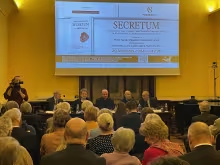
On 29 February 2024, beginning at 5:30 p.m., the book launch of Secretum, Papi, guerre, spie: misteri dell’Archivio Vaticano svelati dal Prefetto che lo guida da un quarto di secolo, Intervista con Mons. Sergio Pagano (Popes, Wars, Spies: Mysteries of the Vatican Archive Revealed by the Prefect Who Has Led It for a Quarter of a Century. An Interview with Monsignor Sergio Pagano) took place in Rome. The distinguished event was hosted in the ceremonial hall of the Fondazione Marco Besso, located in the heart of the Eternal City at Largo di Torre Argentina. Alongside the author, Monsignor Sergio Pagano, Bishop-Prefect of the Vatican Apostolic Archive, numerous journalists and a large audience of interested guests were in attendance. Representing the Vilmos Fraknói Vatican Historical Research Group (PPKE–PTE HUN-REN), Katalin Nagy—Vatican archival research resident of the Research Group and research fellow of the Gyula Moravcsik Institute—was present. What follows is her brief report on the event.

The book presentation was opened by Paolo Pagliaro, Editor-in-Chief of La Repubblica and himself the author of several books. He drew particular attention to the title Secretum, which deliberately evokes the former name of the “Vatican Secret Archive.” He emphasised that many of the documents preserved in the Archive still await thorough scholarly investigation in order to be properly interpreted. Numerous questions remain unanswered to this day, notably concerning the pontificate of Pope Pius XII and figures such as Galileo Galilei.

The second speaker was Paolo Mieli, former Editor-in-Chief of Corriere della Sera. In his remarks, he highlighted that Monsignor Pagano’s book offers a balanced and well-founded portrayal of Pope Pius XII in relation to the events of the Holocaust. The same methodological sobriety, he noted, characterises the treatment of topics such as King Henry VIII of England and the discovery of America. Lucio Caracciolo, Editor-in-Chief of the Italian Geopolitical Review, focused on the meaning of Pope Pius XII’s silence, even in light of the well-documented fact that the Church provided extensive assistance to Jews subjected to persecution.

Finally, Massimo Franco, also a member of the editorial board of Corriere della Sera, observed that Monsignor Pagano—having worked as an archivist for forty-five years and as Prefect for twenty-seven—possesses an unparalleled knowledge of the Vatican archival fonds and their secrets. He noted that in a secluded part of the Archive, documents had been discovered indicating that Pope Pius XII maintained a well-organised political intelligence network, bordering on a “spy system.” At the same time, some of these documents suggest that materials deemed sensitive for the Church may have been destroyed. In this regard, Franco stressed that historical facts must not be concealed.

Towards the conclusion of the event, Monsignor Pagano himself addressed the audience, adding that archival documents attest that Pope Pius XII held several bank accounts with different financial institutions, one of which was used specifically to provide material assistance to Jews. He further noted that the Pope’s silence regarding the situation of the Jews can be interpreted in various ways, including the possibility that he sought to avoid worsening their already precarious circumstances and thus felt compelled to remain silent, despite his genuine concern for their plight.

The event was followed with great interest by numerous university lecturers, Italian and international researchers, journalists, and members of staff of the Vatican Apostolic Archive.
 

2024. March 12.

The Corvin Chain Society held a scientific session on March 12, 2024, at its prestigious headquarters in Budapest City Park. Among the invited speakers was Péter Tusor, the leader of the Fraknói research group. The title of his presentation was "Between Antiquity and Modernity: The Papacy in the Early Modern Period."

More info: here and here.

2024. March 16.

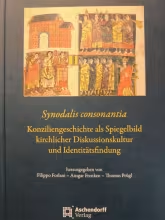
'Synodalis consonantia. Konziliengeschichte als Spiegelbild kirchlicher Diskussionskultur und Identitätsfindung' study volume was presented at the Pontificia Università della Santa Croce in Rome on March 9, 2024, in the presence of distinguished participants. This grand work celebrates the 70-year-old Johannes Grohe, a professor at the university. Prof. Grohe is the chief editor of Annales Historiae Conciliorum and also holds a prominent position in the Research Project History of the Church Councils. The Fraknói Research Group has been collaborating with the Gesellschaft für Konziliengeschitsforschung for a decade and a half (see herehere, and here). The study in the Grohe volume with relevance to Hungary is titled: 'Councils of Hungary in the Early Modern Period'


Invitation

Table of contents 

2024. March 16.

As part of the 2024 Fraknói Centenary Program Series, several members of the Research Group present the latest scientific findings related to the topics investigated by Fraknói and his contemporaries in various lectures. Following Balázs Rétfalvi's presentation, on March 13, 2024, Viktor Kanász discussed the history of Móric Szász's 1552 Hungarian campaign and encampment in Győr.

During his presentation, he emphasized the significance of contemporary nuncios' reports on Hungarian affairs, a point also highlighted by Vilmos Fraknói, as these sources contain valuable information about the geopolitical background and military events of the year 1552. They shed light on the siege of Eger and Szász Móric's encampment in Győr. Additionally, contemporary documents from Italian, Viennese, and Hungarian archives provide further insights.

Using these sources, the presenter first outlined the highly negative historiographical interpretations that emerged concerning Szász's electoral activities. He then juxtaposed these interpretations with the newly discovered sources.

The content of Viktor Kanász's presentation was published in the 2023 issue of Arrabona and can be downloaded from there.

As the next event in the Fraknói Centenary, on April 10th, Péter Tusor will hold the IX. University Workshop Seminar.


2024. March 29.

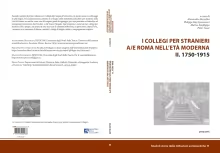
As in previous years (see, for example, 2018 Budapest, 2019 Rome, 2021 Rome), the Fraknói Research Group continues its active cooperation with the Istituto Nazionale di Studi Romani and the Center for Papal History and Central European Studies at the University of Viterbo. The Research Group has had a working relationship with the latter for a decade and a half. As part of this collaboration, an international symposium entitled "Foreign Colleges in Rome between 1750 and 1915 (I Collegi per stranieri a Roma 1750-1915)" was organized at the end of 2023, which was a continuation of the previous year's scholarly conference examining the early modern history of Roman national colleges. (A report on this can be found here) The volume containing the proceedings of the event has already been published. The editors are Alessandro Boccolini, Philippe Roy-Lysencourt, Matteo Sanfilippo, and Péter Tusor, and the publisher is Edizioni Sette Città in Viterbo.

In addition to the preface, the volume, which includes ten studies primarily in Italian and partly in English, as well as an index of names, represents the ninth prestigious publication of the Fraknói Research Group in collaboration with an esteemed foreign publisher.

Book's data: I collegi per stranieri a/e Roma nell’ età moderna. II: 1750-1915,  a cura di Alessandro Boccolini–Philippe Roy-Lysencourt–Matteo Sanfilippo–Péter Tusor (Studi di storia delle istituzioni ecclesiastiche 11) Viterbo: Sette Citta 2024.

Here you can download.

2024. April 4.

On 3 April 2024, Tamás Fedeles, co-head of the Fraknói Research Group and Head of Department Professor at the Faculty of Humanities and Social Sciences of the University of Pécs, delivered a lecture entitled “The Last Medieval Hungarian Duke: Lawrence of Ilok (1459/60–1524)” as part of the Medieval Evenings lecture series at the Faculty of Humanities and Social Sciences of Pázmány Péter Catholic University.

The occasion for the lecture was provided, on the one hand, by the approaching 500th anniversary of Lőrinc Újlaki’s death, and on the other by the advanced stage of Professor Fedeles’s forthcoming monograph devoted to the duke’s life and career.


2024. April 6.

Péter Tusor gave a lecture titled "In the Shadow of Saint Peter" – The German-Hungarian College in Rome and Its Students in the Long 19th Century at the Prohászka Conference held on April 6th at the Central Seminary Institute.

Invitation

PPT

2024. April 11.

On April 10, 2024, the Fraknói Research Group held its 9th workshop seminar at the Central Seminary, within the walls of the former Pauline monastery, in the presence of students from Pázmány University. The subject of the seminar was the newly published Italian-Hungarian bilingual volume of the Collectanea Vaticana Hungariae. Its title was "The Baptismal Register of the Roman German-Hungarian College: The Baptismal Entries of Hungarian Students (1599–1713)." The author, Péter Tusor, presented his research and findings.

The first chapter provided an overview of the history of the College. Founded in 1552 as the German College and operating as the German-Hungarian College from 1580, this venerable institution has been well researched by both positivist and modern historiography. Thanks to the works of Andreas Steinhuber, Endre Veress, Peter Schmidt, and István Bitskey, the student prosopography, functioning, and impact of the institution on German and Hungarian cultural and ecclesiastical history are excellently understood for the early modern period. The College can be considered as the "missionary seminary of the old continent," contributing significantly to the formation of the European ecclesiastical and clerical landscape during the Council of Trent with its internal multiculturalism, multi-ethnicity, and naturally supra-national character.

The second chapter analyzed the baptismal register, while the third chapter provided information on the principles of source publication.

The research was inspired by an international conference held in Rome in December 2022. The publication of the volume also coincides with the Fraknói Memorial Year. In the late 19th century, Fraknói Vilmos (1843–1924) dealt with the history of the College in his study published in the pages of the Katholikus Szemle in 1887. The dedication of the book is addressed to S.E.R. Levente Balázs Martos, a former student of the Roman German-Hungarian College, on the first anniversary of his episcopal ordination. In the late 19th century, the Central Seminary hosted meetings of the Monumenta Vaticana Commission under the presidency of Cardinal Lajos Haynald. According to Fraknói Vilmos's vision in 1904, he would have become a member of the supervisory body of the Hungarian historical institute in Rome in case of vacancy at the Szent Jobb Abbey. Since 2004, the infrastructure of the Fraknói Research Group has been provided by the Central Seminary, where Fraknói Vilmos himself was a student from 1858 to 1864.

The e-book version of the volume can be downloaded here.


Invitation

PPT

Magyar Kurír

Pictures and video below 

2024. April 11.

On 6 April, Gábor Nemes, Senior Research Fellow of the Fraknói Research Group, appeared on the Hungarian television channel M5 in the history magazine programme História, which focused on Cardinal Tamás Bakócz, Archbishop of Esztergom. Drawing also on the results of his research in the Vatican Archives, Nemes discussed the cardinal’s stay in Rome, his chances in the papal election, and the conclave that ultimately resulted in the election of Pope Leo X. He also addressed the possible intentions behind Pope Leo X’s decision to appoint Bakócz as papal legate.

On the same day, Viktor Kanász, Research Fellow of the Group, gave an interview in Nagykanizsa for Országjáró, a programme broadcast by Kossuth Radio. Based on his research in ecclesiastical and military history, he presented the life of György Thury, captain-general of Kanizsa, the circumstances of his death, and the presumed location of his burial. 


2024. April 16.

On April 16th, the Dies Academicus university day was held in the Pope St. John Paul II Hall at Pázmány Péter Catholic University, where newly appointed associate professors and professors of the Catholic University introduced themselves with their lectures.

As part of this event, Péter Tusor discussed the origin of the princely title of the Archbishops of Esztergom. In his presentation, he significantly reinterpreted the traditional standpoint represented, among others, by Antal Meszlényi. Based on source criticism, he demonstrated that the claim to the princely title already appears in the time of Péter Pázmány. Péter Pázmány's successors were consistently addressed as "Celsissime Princeps" in the missives. The Hungarian version of the address appears in the case of György Széchényi as "Méltóságos és Nagyságos Fejedelem" (Illustrious and Magnificent Prince). The granting of the princely title in 1714, at the request of Ágost Keresztély, can be interpreted in connection with these precedents. Subsequently, the Archbishops of Esztergom used the title of prince of the Holy Roman Empire (Princeps Sacri Romani Imperii [S.R.I.]) in their own intitulations. Keresztély Ágost himself also used it, who had previously been only Duke of Saxony.

Most of the time, the princely rank, associated with the person of the incumbent archbishop, was linked to the primatial title in the 19th century, particularly with János Scitovszky. From the Middle Ages, the Archbishops of Esztergom were the primates of the country, and following the claim formulated by Pázmány, they were also princes from 1714 onwards. The prestigious expression "Prince Primate of Hungary" was coined in 1855, after numerous informal appearances in the first half of the 19th century, coinciding with the conclusion of the Austrian Concordat. From then on, it became the official title of the Archbishops of Esztergom, and even preceded the archbishopric in informal usage. The concept of "Princeps-Primas inclyti Regni Hungariae" is based on real historical precedents but took its current form during the Romantic and Historicism era, in connection with the defense of Hungarian national and ecclesiastical independence. Its role in preserving historical and national identity became even more significant after the Treaty of Trianon, during the period of the kingdom without a king, and particularly after 1945.

A comprehensive study containing the results of this research ("The Princely Title of the Archbishops of Esztergom from Pázmány to Scitovszky, 1635–1855") will be published in the near future. The detailed exposition of the Pázmány claims was published in 2022. You can listen to the recording of the lecture below, and the PowerPoint presentation can be viewed here.


Invitation

2024. April 18.

In April 17th, in the grand hall of the Nádasdy Ferenc Museum in Sárvár, Viktor Kanász, a research associate of the Research Group, delivered a presentation titled 'Faith and War: Rome and Sárvár in the 16th-17th centuries.'

Following a welcoming address by Gábor Szibler, Kanász delved into the intertwined histories of the Kanizsai and Nádasdy families with Rome, presenting sources from the Vatican Apostolic Archives and the Apostolic Library. He extensively covered Kanizsai László's pilgrimage to Rome and Loreto in 1525 and the circumstances of his death, the centuries-old controversies controversies surrounding Nádasdy Tamás's religiosity, and the previously undisclosed connections between the nobleman and the papal nuncios. He then showcased the Nádasdy-related documents from the Holy See during the Thirty Years' War. Briefly, he touched upon the relevance of the Research Group's latest volume and the research on the Árpás Altarpiece to Sárvár. In conclusion, he emphasized that various sources awaiting exploration in papal collections and the Nádasdy archives could significantly enrich the known history of the Kanizsai and Nádasdy families.


Fotók: Takács-Reichardt Gabriella

2024. April 29.

On April 25th, to great interest, two members of the Research Group, György Sági and Viktor Kanász, held a presentation at the Thúry György Museum about the history and operation of the Sisters of Mercy in Nagykanizsa.

Following the welcome speech by Director Csilla Száraz, György Sági, in the introduction to his presentation titled "Overview of the Operation of the Sisters of Mercy in Hungary (from 1853 to the present)". In the main part of his presentation, he presented the formation of the Hungarian Province of the Sisters of Mercy and the work of the sisters serving in it. He briefly outlined the changes and challenges during the tenure of each Hungarian visitator (understood as provincial superiors) and the opportunities for service provided by circumstances beyond the sisters. At the end of his presentation, he illustrated with numerical data that despite the decades of "dispersion" following Hungary's once most populous religious community, diminished but faithful to their four vows (chastity, poverty, obedience, and service to the poor), they continue to be ready to serve those in need.
In his presentation titled "The Forgotten Sisters of Nagykanizsa and the Hospital Chapel," Viktor Kanász described the diverse activities of the sisters in Nagykanizsa between 1885 and 1950. He discussed the ongoing research process over the years and the varied nature of the sources, presenting the nature, usability, and findings of documents and photos found in Kanizsa, Zalaegerszeg, Budapest, and Paris (see here). Subsequently, he presented the circumstances of the sisters' settlement in Nagykanizsa, the nursing and catering tasks carried out in the hospital, the charitable, cultural, and social activities of the sisters, focusing primarily on the work of the Love Association and the Maria Association. He also outlined the development of spiritual care for the sisters, highlighting the work of the Franciscans, the Heart of Jesus Parish, and hospital chaplains. In this context, he thoroughly analyzed the history of the construction of the still functioning hospital chapel, as well as the role of Imre Longauer. He pointed out the significant resonance of certain celebrations of the order in Nagykanizsa, demonstrating that the sisters were an integral and important part of the city's life, which was only ended by the dispersion in 1950. Under the communist dictatorship, the operation of the order in Nagykanizsa slowly faded into oblivion; local history literature only superficially dealt with it, and physically, only the hospital chapel, the graves of the sisters, and the stained glass windows preserved in the Thúry György Museum tell of their presence. Therefore, together with György Sági, they plan to present the events outlined in the presentation in detail in a forthcoming volume published by the Museum.


2024. May 4.

       Fraknói-centenary 1924–2024

The venue and theme of the Fraknói Academy, held for the tenth time, is justified by the centenary of the death of Vilmos Fraknói (1843–1924) in 2024. Vilmos Fraknói was the main organizer of Hungarian historical research in the Vatican following the gradual opening of the Holy See's collections from 1881. He initiated the Monumenta Vaticana Hungariae, and in the 1890s, using the income from his ecclesiastical benefices, he established the Hungarian Historical Institute in Rome as a private institution. He did not work alone; several others joined the efforts. The roles of his collaborators are important, yet their activities in Rome have not been thoroughly examined by historical scholarship.There is also much to be said about Fraknói Vilmos's years in Rome, his plans, and especially his legacy. The Fraknói Academy, established in 2015 at Pázmány University under the MTA Momentum Program and previously held in the summer, has presented his life, his extensive scientific activities, and his contemporaries at the forefront of Vatican research. On May 2, in the grand hall of the episcopal palace in Nagyvárad, László Böcskei, Bishop of Nagyvárad; Péter Tusor, founding curator of the Fraknói Academy; Viktor Kanász, on behalf of Nándor Birher, Dean of the Faculty of Humanities and Social Sciences at Pázmány Péter Catholic University (PPKE BTK); and academician László Solymosi welcomed the audience, which included participants mainly from PPKE BTK, as well as from Pécs, Szeged, Kolozsvár, and Nagyvárad. Mons. József Fodor, episcopal vicar and grand provost of the cathedral chapter of Nagyvárad, shared his thoughts on the scholarly abbot-canon. Following this, together with Bishop László Böcskei, they presented Fraknói Vilmos's work, "The Liberation of Nagyvárad in 1692 and Pope Innocent XII " reprinted for the occasion with a recommendation from the bishop.

The first session began thereafter, focusing on the early days of Hungarian historical research in the Vatican, exploring new data and perspectives. Péter Tusor's presentation centered on the institutionalization of Hungarian historical research in the Vatican initiated by Vilmos Fraknói in the 1880s. Fraknói's private historical research institute, established in his Roman villa in 1894, sought a solid legal and financial foundation with the help of the Nagyvárad chapter, diocese, and episcopal body in 1905 and again in 1911–1912. Both attempts were accompanied by public controversy and did not succeed. The Hungarian Historical Institute in Rome was established with state support in 1913. Kornél Szovák's presentation highlighted Vilmos Fraknói's place and role in the history of Hungarian medieval studies. Using sources from Fraknói's early career, he emphasized Fraknói's conscious commitment to his research subjects, the critical appreciation of his works, and his unwavering philosophical convictions. Szovák also noted Fraknói's efforts in publishing sources and choosing his historical writing genre deliberately. He traced Fraknói's long-term impact on research history and his extensive Vatican source research, including the rediscovery of some sources. Tamás Fedeles, through Zsófia Szirtes, reviewed László Fejérpataky's role in Vatican research. Fejérpataky, known as a renewer of Hungarian auxiliary sciences, especially diplomacy and paleography, played a significant role in the first two volumes of the Monumenta Vaticana Hungariae series initiated by Fraknói. Between 1883 and 1886, he spent several months in the Vatican collections, resulting in the publication of documents from Cardinal Gentilis de Monteflorum's Hungarian legation (1885) and the accounts of 14th-century papal tax collectors in the Carpathian Basin (1887).

The second session focused on the Vatican activities of Fraknói Vilmos's contemporaries. Viktor Kanász presented Lipót Óváry's Neapolitan church history research, revealing how the young editor joined Garibaldi's army and what motivated his Neapolitan Hungarian-related research in the early modern period. Although Óváry conducted research in many Italian collections outside Naples, he never researched in the Vatican archives and library despite his efforts, yet he made significant contributions to the historiography of Vatican research through his work on the Farnese archives of Naples. Gábor Nemes gave a presentation on József Lukcsics, one of Fraknói's students and collaborators. With the support of Bishop Károly Hornig of Veszprém, Fraknói involved Lukcsics in the work of the Monumenta Romana Episcopatus Vesprimiensis. During his four-year stay in Rome, Lukcsics contributed significantly to the third and fourth volumes of the Veszprém document collection and reviewed volumes from the Apostolic Camera archive. Tamás Kruppa's presentation focused on Endre Veress's Vatican research, which began shortly after Fraknói. Veress's work on 16th-17th century Transylvania and the Principality of Transylvania placed him on the map of Hungarian and international scholarship. He published the extensive material he gathered mainly in biographical monographs and several series, some of which he initiated, between 1901 and 1948.The third session, part of the Bischofslexikon/Bishop's Lexicon project, focused on 19th-century research and the history of the diocese. Austrian project partner Professor Rupert Klieber's evening lecture, presented by András Forgó, discussed the Hungarian episcopate between 1804 and 1918. Fraknói Vilmos, as bishop-elect of Arbe from December 1889, had multiple connections to the hierarchy.

The fourth session examined Vilmos Fraknói's role as the "Hungarian Ranke" in establishing modern medieval and early modern research in Hungary. Analyzing his newly completed oeuvre bibliography provided insights into his 18th-19th century work as well.György Rácz spoke about Fraknói Vilmos as the founder of Hungarian medieval studies. He emphasized Fraknói's role in increasing the domestic source base through his Hungarica research. As the director of the National Museum's Széchényi Library from 1875, he enabled the transfer of family archives to the museum's manuscript collection, paralleling Pauler Gyula's work at the National Archives. Gábor Nemes analyzed Fraknói Vilmos's oeuvre based on his bibliography. Scientometric analysis revealed 63 volumes, 199 studies, 230 lexicon entries, 15 reviews, and nearly 100 scientific-political and public writings, showcasing his impressive body of work. Nemes enriched our understanding of Fraknói's methods and scientific creed through his analysis of Fraknói's reviews and pseudonymously written articles, exploring the reasons for such publications.

The final two sessions presented Fraknói's connections to Nagyvárad and Transylvania, his activities as Secretary-General of the Academy, the controversies surrounding his work, and his journalism and death. Attila Lakatos-Balla discussed Fraknói's literary canonry in Nagyvárad and his abbacy in Szentjobb. He demonstrated that contrary to popular belief, Fraknói received significantly less income from Szentjobb than expected, with his patronage primarily supported by the Nagyvárad stall's benefits. In her presentation, Zita Lőrincz discussed Vilmos Fraknói's view of Transylvania. The history of Transylvania has long been intertwined with the history of the Hungarian people in the national consciousness. In his scholarly publicism, Transylvania was not a primary focus for Vilmos Fraknói; his works were free from denominational bias, striving for a consciously objective perspective. Julianna Orsós undertook a historical analysis of science policy. In her lecture, she based her evaluation on Albert Berzeviczy, who served as President of the Academy of Sciences for over thirty years, and who considered Vilmos Fraknói's most significant debates to be with Kálmán Thaly, Lajos Kossuth, and Henrik Marczali. The presenter demonstrated that the designation of Fraknói's debate partners—and, by extension, his most significant research topics—was shaped by the scientific policy expectations of the era. Attila Hőgye and Csongor Cziráki jointly presented on Vilmos Fraknói's activities as Secretary General, which they primarily showcased through his correspondence and official reports. They discussed the path Fraknói took within the Academy and what led to his election as Secretary General, highlighting several notable and interesting issues from the ten years he served in that role. Róbert Oláh P.'s presentation focused on Fraknói's public writings, a less well-known segment of the great scholar's career. Between 1870 and 1920, Fraknói wrote more than thirty articles, mainly for Magyar Sion and Budapesti Szemle. He addressed three major topics: the debates on Catholic autonomy in the 1870s, the 1882 education law, and World War I, particularly Italy's entry into the war. His writings were characterized by clear situational assessments and action-based responses to outlined problems. The final presenter, Viktor Kanász, discussed the last years and early legacy of Vilmos Fraknói. He covered the period from Fraknói's 80th birthday, examining the relentless work of the elderly priest: the surgeries he underwent, his housing issues due to income losses mainly caused by Trianon, his final research, and manuscripts. After detailing his death and funeral, attendees learned about the circumstances of Fraknói's memorial construction and reviewed visual sources depicting the "star historian," reflecting the depth and diversity of his contemporary reputation.

After the academic presentations, on the third day, Attila Lakatos-Balla and Bishop László Böcskei guided participants through the bishop's palace and the cathedral, concluding the Xth Fraknói Academy with a tour of the castle and city. The organization of the conference was made possible by the support of Nándor Birher, Dean of PPKE BTK, Bishop László Böcskei, and the Diocese Nagyvárad. The realization and execution of the Fraknói Memorial Conference were assisted by the staff (Centrum Patachich Zarándok és Kulturális Központ) of the Nagyvárad bishopric: Anita Méhész-Géczi-Erdei, Attila Lakatos-Balla and Tünde, historian-museologists, archivist Sándor Csorba, and János Kristófi, the cathedral's organist. The written versions of the presentations, supplemented with other publications on Fraknói's biography, will be presented by the Fraknói Research Group on November 20, the anniversary of his death, in the ceremonial hall of the Central Seminary in Budapest.


PROGRAM

GALLERY: 1. nap, 2. nap, 3. nap

2024. May 25.

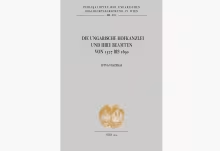
On 23 May 2024, Volume XXI of the series Publikationen der ungarischen Geschichtsforschung in Wien (PUGW) was presented in Vienna. The monograph by István Fazekas, Die ungarische Hofkanzlei und ihre Beamten von 1527 bis 1690, was introduced by Thomas Winkelbauer. Thanks to the careful organisation of Iván Bertényi Jr., the event—marked by lively interest—was hosted at the Vienna seat of the Hungarian Embassy, located in the former palace of the Hungarian Court Chancellery.
This early modern institutional history, based on a prosopographical methodology, represents a work of fundamental importance for both Hungarian and Austrian scholarship and constitutes one of the most valuable and enduring contributions to the Viennese Hungarian historical series. Numerous well-known figures from Austrian archival and academic circles were present at the event.

By contrast, 21st-century Hungarian diplomacy has, as a rule, shown little understanding of scholarship and its modes of operation. It frequently relies on ad hoc, purely representational events—such as the one organised in October 2022 at the Palazzo della Cancelleria in Rome—which conspicuously lack any solid scholarly foundation. One may, of course, send people abroad and repeatedly spend Hungarian taxpayers’ money on visual design in the service of individual career ambitions, but such efforts are, in essence, devoid of real meaning. Science diplomacy without genuine scholarship is a contradictio in adiecto—a wooden iron. I write this on the basis of nearly three decades of experience in Rome.

In Vienna, by contrast, scholarship and diplomacy consistently go hand in hand. Indeed, the Hungarian Embassy in Vienna regularly facilitates the reception of major historical research projects by making the splendid ceremonial hall of its palace in Bankgasse available for the presentation of important scholarly works. This was the case, for example, with the Bischofslexikon (see here). All this takes place without any direct or indirect party-political overtones, a fact that deserves particular emphasis.

Behind this stands the cooperation between the Collegium Hungaricum in Vienna, the historical institute operating within its framework, and the Viennese archival delegation—and, personally, the work of István Fazekas, Gábor Ujváry, András Oross, Krisztina Arany, Iván Bertényi Jr., and others. This cooperation finds its most tangible expression in the jointly edited scholarly series produced by these three institutions. Through this series, the Fraknói Research Group is also connected to Hungarian historical research in Vienna, since the PUGW is the twin series of the Collectanea Vaticana Hungariae (CVH), as I have previously explained (see here). It is no secret that this twin-series concept follows a Vatican archival model, which has met with approval both in Rome and in Vienna.

To what I already outlined in 2018, it is worth adding that both the conceptual and practical idea for the PUGW originated directly from the CVH. The guiding question was simple: if Vatican-based research already has a well-conceived and practical scholarly series, why should Hungarian historical research in Vienna not have—mutatis mutandis—a similar one, drawing on the same know-how and typographical infrastructure? My only hesitation concerned the fact that the additional workload would delay the CVH by three to four volumes. In the end, I concluded that, if successful, a new Viennese series would justify this sacrifice.

In 2008, during one of my last extended research stays in Vienna, I began to discuss these ideas more intensively with my mentor and friend István Fazekas, considering the realistic possibilities of implementation. The PUGW was the result of this shared reflection. Its rapid launch was urgently needed, not least in order to publish conference proceedings from earlier years of the Collegium Hungaricum. A decisive step in the founding process was István Fazekas’s success—assisted decisively by Anna Fundarek—in convincing József Kelenik, then director of the BMTI, of the importance, usefulness, and feasibility of the project.
I record all this primarily for the future rather than the present, since the PUGW is now regularly referred to—both retrospectively and today—as an initiative originating from the Viennese Hungarian institutions themselves, indeed as one of their official undertakings. This shift in perception is, of course, a welcome development and a clear, visible sign of the series’ viability, consolidation, and success.

Not only is the overall design of the PUGW (cf. here) identical to that of the CVH—apart from the fact that the involvement of Gondolat Publishers was no longer necessary—but, in agreement with István Fazekas, I also modelled the copyright pages of the first volumes on the CVH. Although this was not legally required even at the time, I included, for example, a responsible publisher, thereby enhancing the prestige of the new series.

Considerable thought was devoted in 2009 to the name of the series. The stylistic model was the Austrian Publikationen des ehemaligen österreichischen Historischen Instituts in Rom. Since three institutions stand behind the PUGW, a collective designation was required. Among several possibilities, I opted for Ungarische Geschichtsforschung in Wien, a choice that also met with the approval of my co-founder, István Fazekas. Under this title, the series is suitable not only for publishing archival research conducted in Vienna and Austria, but also for presenting any result of Hungarian historical scholarship worthy of publication in Vienna and, by extension, before the entire German-speaking scholarly world.

A particular distinction of the PUGW is that it obtained an international ISSN number (2073-3054) from a French issuing centre. As a consequence, Hungarian historical research has, for fifteen years now, possessed a foreign-published, internationally registered series (recognised as such in the MTMT) in which Hungarian historians can publish at high quality, quickly, simply, and—above all—at very low cost. In other words, there is no need to enrich the profits of international publishers with millions from Hungarian institutional or grant budgets in order to achieve internationally visible publications. Thanks to the distribution system reorganised by András Oross, the PUGW is now present in major European and non-European public libraries.

This represents a unique opportunity, the full exploitation of which has only just begun. As a curiosity—and ultimately for the record—it may be noted that the Roman numeral numbering of the PUGW was essentially accidental. I myself typeset Volumes I, III, and IV; Volume II was produced in Pécs under my supervision. Because the digit “1” of the digitally cut Tótfalusi Antiqua used for the CVH closely resembles a capital “I”, the Pécs typesetter interpreted it as a Roman numeral and numbered the second volume accordingly. I ultimately did not correct this—although placing, for example, a Roman numeral XXXVIII on the spine of a thinner volume may one day pose a challenge. The temptation of the hidden game, whereby the Roman numeral alludes to the Vatican connection of the PUGW, proved stronger. Although the annotation system underwent some changes from Volume V onwards, the bibliographical typology of the PUGW and CVH remains essentially identical.

After minor and major fluctuations, the PUGW now appears to have stabilised. A clear sign of this is that, alongside the editorial board, András Oross has assumed responsibility as managing series editor, while—thanks to Krisztina Arany—the Viennese archival delegation has taken on an increasingly substantial role alongside the historical institute. The implementation of the pugw.at series website, proposed by me in a conversation with András Oross in Vienna in early December 2023, will open a new chapter in the history of the PUGW and, with it, of Hungarian historical research in Vienna. In the future, digital versions of PUGW volumes will become available online in a more visible, more uniform, and above all faster manner. Since the series’ own website is expected to be completed only by spring 2025, the newly prepared e-book version of Volume XXI, presented recently in Vienna, is currently accessible and downloadable via institutumfraknoi.hu (here).

The key to further development lies in the consolidation of financial foundations, with state and academic backing. The Viennese legacy of Árpád Károlyi and Kuno Klebelsberg unquestionably deserves this.
 

Péter Tusor

INVITATION

PROGRAM

2024. June 1.

Under the title "Storia d’Ungheria – History of Hungary," the Fraknói Research Group and the Moravcsik Gyula Institute are launching a new international book series, published by Edizioni Sette Cittá in Viterbo. The primary goal of the series is to publish the results of their own fundamental research and the findings of Hungarian historiography, art and literary history, as well as Italian-Hungarian relations, in either Italian or English. The secondary goal is to publish historical works related to Hungary exclusively in Italian, which may be of interest in Italy.

The editors of the series are Matteo Sanfilippo and Péter Tusor. The editorial board members are Alessandro Boccolini, Tamás Fedeles, Viktor Kanász, Gaetano Platania, Giovanni Pizzorusso, and Kornél Szovák. The launch of this new international Italian series in Hungarian historiography is linked to the Fraknói centenary (1924-2024). The first volume will be published on the occasion of the commemorative conference in Rome on June 6 (Protagonisti e collaboratori. Studiosi provenienti dall'Europa centro-orientale presso gli archivi della Santa Sede tra il 1881 e il 1918, Istituto Nazionale di Studi Romani). The Viterbo-based Storia d'Ungheria, alongside the Vienna-based Publikationen der Ungarischen Geschichtsforschung in Wien, is the second foreign publication series in which the Fraknói Research Group has played a key role.

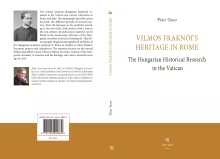
The forthcoming volume (Vilmos Fraknói’s Heritage in Rome. The Hungarian Historical Research in the Vatican) presents Hungarian historical research conducted in Vatican and various Roman and Italian collections from its inception to the present day. The monograph details the different periods of research history from the Baroque era through the positivism period to the end of the 20th century, with a glimpse into the 21st century as well. Its primary source material is found among the documents in the manuscript archive of the Hungarian Academy of Sciences. This historiography diagnoses the significant problems of the Hungarian scientific presence in Rome compared to other Western European projects and institutes. The narrative focuses on Bishop Vilmos Fraknói, who passed away a century ago in 1924, and his legacy. The appendix contains official documents from the Roman notarial archive based on which the ownership of the Fraknói villa was registered in favor of the Hungarian state—solely and exclusively for the purposes of a historical institute.

The printed version of the first volume of Storia d’Ungheria – History of Hungary can be ordered from the publisher and is available for download as an e-book here.


2024. June 4.

The Fraknói Centenary (1924–2024) marked a significant event on June 4, 2024, in Rome. June 4 is the anniversary of the Treaty of Trianon and the Day of National Unity. Notably, on the same day in 1882, the committee overseeing the publication of the Monumenta Vaticana Hungariae was established in Budapest under the chairmanship of Cardinal Lajos Haynald, Archbishop of Kalocsa. It was therefore fitting that the Research Group, in Rome for the centenary international memorial conference, paid tribute on this day to the monumental memorial of Hungarian statehood and its commissioner, Vilmos Fraknói, in the Lateran Basilica.
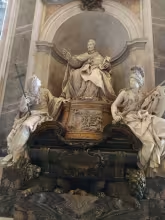
The relief commissioned by Fraknói in 1909 and created by sculptor József Damkó stands above the former tomb of Pope Sylvester II. It depicts the handing over of the Holy Crown, with Patrona Hungariae flanked by Saint Stephen and Saint Ladislaus on either side. Fraknói's name and his abbey at Szentjobb are inscribed on the monument's inscription, while his figure and facial features are immortalized by the prelate standing behind the pope. Short speeches were delivered during the wreath-laying ceremony by Péter Tusor, Kornél Szovák, Gábor Nemes, and Tamás Fedeles (see here)

2024. June 6.

      Fraknói Centenary (1924–2024)

The prominent international event of the Fraknói centenary took place on June 6, 2024, at the Aventine headquarters of the Istituto Nazionale di Studi Romani, next to the headquarters of the Sovereign Military Order of Malta. At the scientific conference titled  Protagonisti e Collaboratori – Studiosi provenienti dall’Europa centro-orientale presso gli archivi della Santa Sede tra il 1881 e il 1918  (Protagonists and Collaborators - Researchers from Central and Eastern Europe at the Holy See Archives between 1881 and 1918), in addition to members of the Fraknói Research Group, Italian, Austrian, Czech, Polish, and Croatian researchers also gave presentations.

The symposium focused on Fraknói, his Hungarian colleagues, and historians from other nations of the Austro-Hungarian Monarchy conducting research in the Vatican archives from the opening of the papal archives by Leo XIII until the end of World War I. Consequently, the conference examined the origins of the Monumenta Vaticana Hungariae and Fraknói's Hungarian Historical Institute in Rome from a broader perspective and within a wider historiographical context. The studies from the presentations will be published as the second volume of Storia d'Ungheria – History of Hungary by Edizioni Sette Città in 2025. The international historiographical conference dedicated to the 100th anniversary of Vilmos Fraknói's death was organized by the Fraknói Vilmos Vatican Historical Research Group, the Moravcsik Gyula Intézet (HUN-REN BTK, Budapest), the Istituto Nazionale di Studi Romani (Rome), and the CESPoM Centro di ricerca CESPoM con sede all’Università degli Studi della Tuscia (Research Center at the University of Tuscia) (Viterbo).

The conference was opened by Gaetano Platania, president of INSR, and László Solymosi, professor emeritus and full member of the Hungarian Academy of Sciences' Class II – where Fraknói served as class secretary between 1873 and 1879. Solymosi's welcoming words were delivered by Katalin Nagy. The academician concluded his speech with the following thought: "Bernard, chancellor of the French school of Chartres, often said around the year 1100: 'We are dwarfs standing on the shoulders of giants, so we can see more and farther than they did.' You are walking in Fraknói's footsteps. I have no doubt that you will see and show more..." Afterwards, the main organisers of the conference, Matteo Sanfilippo and Péter Tusor, opened the conference (the latter's speech in Italian can be found here).

Among the Hungarian speakers, Katalin Nagy spoke first, summarizing the beginnings of Vilmos Fraknói's research in the Vatican Apostolic Archives. Fraknói's surviving research requests indicate that he was in direct contact with the Vatican as early as 1867. In addition to negotiations for organizing the Monumenta Vaticana Hungariae project, Fraknói was able to begin his work in the Vatican Secret Archives between May 26 and June 15, 1881. His two requests found in the Vatican Apostolic Archives Prefecture demonstrate that from the outset, he focused exclusively on materials related to Hungary. The presentation offered the audience insights into the early years of the Monumenta Vaticana Hungariae, primarily following Fraknói's work, which paved the way and established significant pillars of the relationship between Hungarian scientific life and the Holy See, still relevant today.

Péter Tusor's presentation addressed the foundation process of the Monumenta Vaticana Hungariae, which began in 1881. Fraknói was the key figure, but many others assisted him, including Béla Tárkányi, known from hymnals, who accompanied him to Rome. In Hungary, Cardinal Lajos Haynald, Archbishop of Kalocsa, and Bishop Arnold Ipolyi of Besztercebánya led the project. Almost all Hungarian cathedral chapters and bishops supported the publication series. It included important Vatican sources such as the reports of nuncios from the years preceding the Battle of Mohács and the accounts of papal tax collectors, which contain the earliest historical mentions of many Hungarian settlements. Fraknói did everything to make the Monumenta Vaticana appear as a publication of the Apostolic See as well. The series became a lasting creation of Hungarian Catholicism and academic scholarship. Its acceptance among contemporaries was general, regardless of historical viewpoint, professional conviction, or worldview. With the creation of this series, Fraknói's Roman historical institute began its substantial operations. The organization of systematic Hungarian historical research in the Vatican, combined with other historiographical achievements, made him the most significant Hungarian historian of the era of the Austro-Hungarian Compromise.
Kornél Szovák briefly reviewed the state, methodology, and topics of Hungarian medieval research before Vilmos Fraknói's work. He noted that from the beginnings of Jesuit historiography, there was an interest in exploring sources in the Holy See's archives, and that targeted research often did not yield results (e.g., the Golden Bull). He assessed the significance of Theiner's Monumenta, comparing its quantitative and qualitative attributes with those of the Monumenta series founded by Fraknói. He highlighted the exploitation of Pope Boniface IX's bull registers as a significant example, which proved to be decisive for the development of 20th-century Hungarian medieval studies. Both this and Fraknói's oeuvre focused on post-Constance bull research and the formation of the medieval Hungarian ecclesiastical society's image. He also pointed out the new findings related to the documents of Papal Legate Gentilis and concluded by discussing the influential impact of Fraknói's biographical monographs on subsequent research.

Tamás Fedeles presented the role of László Fejérpataky in Vatican source exploration. The young historian joined the Monumenta Vaticana Hungariae project in 1883 at Fraknói's request. He worked on documents related to Cardinal Gentilis de Monteflorum's activities in Hungary, which were published in 1885. During his second research trip to Rome (1885-1886), he worked on the Hungarian data from the 14th-century papal tax collectors' account books, a project started by Frigyes Pesty, resulting in a publication in 1887. Fejérpataky, along with Fraknói and others, was among the first to research the Dataria Apostolica archives, as detailed in his letters from Rome. From 1913 until his death in 1923, he actively participated in the Roman Historical Committee's work under the Hungarian Academy of Sciences. His final work on Vatican sources was published posthumously, with his student Antal Áldásy compiling the notes and drafts into a manuscript that was published in 1926, three years after Fejérpataky's death.

Viktor Kanász discussed the life and Neapolitan research of Lipót Óváry. He outlined Óváry's involvement in Garibaldi's army and his subsequent settlement in Naples, where he began historical research in Neapolitan collections. This was significant as no Hungarian-related research had been conducted there before, and Óváry uncovered and published a large amount of important documents. One of the most important segments was the publication of diplomatic documents from the Farnese archives dating back to Pope Paul III. Although Óváry also conducted research in other Italian collections, such as in Venice and Florence, he never researched in the Vatican collections despite several attempts. However, he actively contributed to the Monumenta Vaticana Hungariae project.
Gábor Nemes gave a presentation on József Lukcsics. The scholarly priest from the Diocese of Veszprém was tasked by Vilmos Fraknói with editing volumes III and IV of the Monumenta Romana Episcopatus Vesprimiensis, while also examining volumes of the Camera Apostolica archives and collecting Hungarian-related sources. These were eventually published in 2014 as volumes I/10 and I/11 of the CVH series.

Tamás Kruppa presented Endre Veress's role in exploring Hungarian memories in the Vatican and Italy. He emphasized that Veress's extensive published and unpublished oeuvre is indispensable for studying Hungarian-Italian relations. His document publications put the Principality of Transylvania on the map of domestic and international scholarship. Veress's achievements are notable as he conducted his research and publication efforts alone, without securing academic membership or a university chair. His document publications, the Fontes Rerum Hungaricarum and Transylvanicarum, effectively took over the roles of the Monumenta Vaticana Hungariae and the Hungarian Academy of Sciences' Monumenta Hungariae Historica series after World War I.

Foreign presenters reviewed the Vatican research of Theodor Sickel, Ludwig von Pastor, the Czech and Polish Roman expeditions, and several Croatian historians.


Poster

PROGRAM

Videos in Youtube-channel, below

Pictures are available in Galery, below

---------

In addition to the conference, members of the Research Group continued their research at the Vatican Apostolic Archive, the Vatican Apostolic Library, and the notarial archives of the Archivio Storico Capitolino (Archivio Notarile Generale Urbano). As part of the Fraknói centenary, the Research Group laid a wreath on June 4 at the monument erected by their namesake in the Lateran Basilica (see here). Afterwards, the members went on a study trip to Viterbo, Caprarola, and Tuscia (see the gallery here).

2024. September 5.

At the turn of the 19th and 20th centuries, thanks to the work of Vilmos Fraknói and József Lukcsics, the monumental volumes of Monumenta Romana Episcopatus Vesprimiensis were published, marking the starting point for the scholarly research and study of diocesan history. In addition to Vatican research, the exploration and presentation of the history of Hungarian dioceses is an integral part of the Fraknói Research Group’s profile. Thus, the publication of the volume on the history of the Archdiocese of Kalocsa represents a continuation of Fraknói’s legacy and forms an important chapter in the Fraknói Memorial Year.

The second professional series of the Research Group, launched in 2015 under the title Collectanea Studiorum et Textuum, has so far published monographs and source editions related to the history of the Archdiocese of Esztergom and the Diocese of Szombathely in its first class. Class III contains studies related to Eger and has published the material of 11 dioceses as part of the Hungarian continuation of the Bischofslexikon 1804–1918 project.
In early August 2023, the presenters at the IX. Fraknói Summer Academy presented the latest results of their research on the history of the Archdiocese of Kalocsa to an audience in the archiepiscopal city. As a result of the academy, a volume edited by Viktor Kanász and György Sági has now been published, featuring nine studies. Following the foreword by research group leader Péter Tusor, the writings are organized into four chapters. In the chapter titled "Path to the Archiepiscopal See," we find the works of András Forgó (Parallels in the Careers of Imre Csáky, Archbishop of Kalocsa, and Imre Esterházy, Archbishop of Esztergom), Mons. Tamás Tóth (Miklós Csáky, Archbishop of Kalocsa-Bács, and His Vatican Prosopographical Sources), and György Sági (The Appointments of Gyula Glattfelder and József Grősz to the Kalocsa-Bács Archiepiscopal See [1942/1943]). The chapter "Conflict and Persecution" features contributions by Tamás Fedeles (The Prince and the Archbishop: A Conflict in the Kalocsa-Bács Diocese at the Dusk of the Middle Ages) and Andor Lakatos (Clerical Careers in the Light of the Grősz Trial 'Revelations': The Trial of Károly Gombos and His Associates). In the third chapter, titled "In Their Own Words," Béla Vilmos Mihalik (The Jesuits of Kalocsa During the Hungarian Soviet Republic, Based on the Autobiography of Elemér Csávossy) and Norbert Csibi (The Lenten Sermons of Archbishop Gyula Zichy in the 1920s and 1930s) present their work. The final chapter, "Archiepiscopal Collections," introduces Fanni Hende (Codex? Fragment? The Breviary Ms. 19 of the Library of the Kalocsa Metropolitan Cathedral) and Adél Lakatos (The Forgotten Art Collection of Archbishop György Császka of Kalocsa-Bács).

The 2023 event and the publication of the volume were supported by PPKE BTK, with special thanks to Professor Nándor Birher.

The e-book version of the volume is available for download here.

Eger was the first city to host a Fraknói (Summer) Academy where the entire conference focused on diocesan history. Following the presentations in 2019, three studies presenting fundamental research findings were published. The first Fraknói Academy to have its own independent study volume was the 2022 Piliscsaba event, dedicated to Hungarian–Holy See relations.

This current volume on diocesan history will hopefully serve as a useful starting point for the future monograph of the Kalocsa-Bács Archdiocese and temporarily mitigate its absence. Alongside Vatican research and diocesan history, the X. Fraknói Academy placed historiography at the center as the third fundamental theme: the Fraknói Centennial (1924–2024) Nagyvárad Memorial Conference, and a new volume of studies emerging from its presentations… (CVH I/24).


2024. September 27.

“La Collectanea Vaticana Hungariae – superando il predecessore di epoca positivista (Monumenta Vaticana Hungariae) – pubblica monografie, studi, regesti e pubblicazioni di fonti complete, repertori e bibliografie rilevanti per il tema della ricerca storica ungherese in Vaticano, senza ulteriori divisioni interne di genere”. Questa semplice descrizione può essere trovata sulla pagina ad Open Access della serie CVH. L’accento è posto sull’elaborazione e l’esplorazione dei documenti vaticani da un punto di vista storico. Il censimento e l’inventariazione del materiale vaticano è un’attività complementare del Gruppo di Ricerca Fraknói. Non è da ultimo porre l’accento sul fatto che il lavoro archivistico apre nuove prospettive nel campo di un’ampia e sostanziale cooperazione scientifica internazionale a Roma.

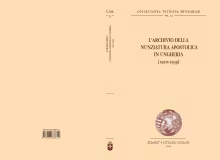
CVH volume I/23, pubblicato ora, è il primo dei due decenni di esistenza della collana, con l’impronta del luogo di pubblicazione Budapest-Città del Vaticano (non Budapest-Roma) e co-pubblicato con Archivio Apostolico Vaticano (Collectanea Archivi Vaticani 128). Titolo: L’Archivio della Nunziatura Apostolica in Ungheria (1920-1939).

Senza sottovalutare i risultati dell’inventario in lingua ungherese (CVH I/14) pubblicato nel 2016 – per questo motivo è stato inserito l’attuale frontespizio – è importante sottolineare che il presente lavoro in lingua italiana non è sostanzialmente la sua versione 2.0. Si tratta di un lavoro molto più esteso che segue in tutto e per tutto il metodo usato nei volumi degli inventari vaticani (ad esempio, le nunziature: CAV 42, 64, 82, 97, 112, 124, 125). In tutti i casi, fornisce indicazioni precise con il numero di folio e la data dei documenti. La curatrice del volume, Katalin Nagy, ha eseguito il controllo di tutti i documenti e ha steso il testo dell’inventario, sotto il coordinamento attivo di Péter Tusor, all’interno dei progetti del dipartimento Hungarica dell’Istituto Gyula Moravcsik. Il volume composto di 438 pagine pubblicato in Vaticano è un orgoglio di questo nuovo istituto quanto dell’Istituto di Ricerca Fraknói (Università Cattolica Péter Pázmány di Budapest). È un particolare piacere che questa sostanziale collaborazione con il più importante deposito della scienza storica universale, e anche con uno dei più significativi laboratori scientifici della Sede Apostolica, si sia realizzata proprio nell’anno del centenario di Vilmos Fraknói (1843–1924), vescovo, storico e segretario generale dell’Accademia Ungherese delle Scienze.

Breve descrizione e disponibilità online di CVH I/23 (= CAV 128): link

2024. October 4.

In the framework of the 10th Fraknói Workshop Lecture, Viktor Kanász summarized the church-organizing activities of Péter Pázmány. The event was occasioned by this year’s Fraknói Centenary. A significant part, indeed the starting point, of the renowned scholar's early modern research involved publications related to Péter Pázmány. After a brief overview of these works, Viktor Kanász presented Pázmány's measures regarding the development of multi-tiered Catholic education, the establishment of the Tridentine Catholic infrastructure, the holding of synods and visitations, the renewal of liturgy, and the rethinking of relations with Protestants. The written version of his lecture, which is also well-suited for use in university education, will be published as the 1st fascicle in the Fraknói Workshop Lecture Series, which begins in the year of the Fraknói Centenary (available for download here)


2024. October 7.

The temporary exhibition titled Splendor and Devotion – The Life and Era of Bishop Ferenc Zichy of Győr opened to the public on October 7, 2024, as a result of the collaboration between the Collection Center of the Diocese of Győr and the Rómer Flóris Art and History Museum. The large audience gathered in the ornate hall of the Collection Center’s library, where Vicar General Dr. Ferenc Reisner and Mayor of Győr Bence Pintér welcomed them. The exhibition was officially opened by Professor István Fazekas, a professor at ELTE Faculty of Humanities, who, in his lecture, highlighted the main stages of Bishop Zichy’s life. He expressed his hope that the exhibition would help elevate the memory of Bishop Zichy to its rightful place among the greatest Baroque patron bishops in Hungary.

One of the exhibition's curators, Gábor Nemes, is a research fellow with the Fraknói Research Group, and the exhibition’s text panels were co-authored by Róbert Oláh, assistant research fellow in the same group. The exhibition presents the life, four-decade episcopal service (1743–1783), and era of Count Ferenc Zichy (1701–1783), Győr’s most prominent Baroque bishop. The exhibition, housed in the temporary exhibition hall of the Collection Center of the Diocese of Győr, is enriched by rarely seen, valuable artifacts and documents from the collections of the Hungarian National Museum, the National Széchényi Library, the National Archives of Hungary, and the University Library.

At the end of the evening, the Győr Philharmonic Orchestra, together with the Philharmonia Chor Wien, performed Benedek Istvánffy's St. Dorothy Mass, written in 1774 for Zichy’s golden jubilee, in the cathedral. The exhibition will remain open until September 30, 2025, at the Collection Center of the Diocese of Győr (9021 Győr, Gutenberg Square 2).


2024. October 15.

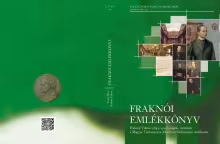
The centenary year organized by the Research Group named after Vilmos Fraknói was built on two main pillars: the commemorative conference held in early May in Nagyvárad and the international symposium in Rome. The annotated version of the presentations from the Nagyvárad conference, supplemented with additional studies, writings, and appendices, was published on October 16, 2024, as volume I/24 of the CVH series. The full version is available for download on the series’ webpage at institutumfraknoi.hu. Its title: Fraknói Emlékkönyv. Fraknói Vilmos (1843–1924) püspök, történész, a Magyar Tudományos Akadémia főtitkárának emlékezete (Fraknói Memorial Book. Remembrance of Vilmos Fraknói (1843–1924), Bishop, Historian, and Secretary General of the Hungarian Academy of Sciences).

Although only the third chapter of the volume explicitly deals with Vatican research ("Italy, Rome, Vatican"), due to Fraknói's foundational and key role, his memorial book finds its most fitting place as the successor to the heritage of the Monumenta Vaticana Hungariae, which he founded in 1882 and officially launched in 1884. This legacy continues in the Collectanea Vaticana Hungariae series (founded in 2002, first published in 2004).

The first section ("Chapters from Fraknói's Biography") addresses various aspects of his life. The second section, titled "The Historian’s Scholarly Path," has a clear objective: to clarify Vilmos Fraknói's significance in the development of modern academic scholarship in Hungary and to redefine his place among Hungarian historians. The appendices include a bibliography of Fraknói’s works, selected documentation about him, and a collection of visual representations. Before the usual apparatus, a chronological overview of his life ties together the divergent threads of the narrative.

The detailed analyses, along with the diverse perspectives of the twenty-two contributing authors—Balázs Rétfalvi, György Sági, Tünde Balla, Attila Lakatos, Attila Hőgye, Csongor Cziráki, Imre Ress, Kornél Szovák, György Rácz, István Fazekas, Zita Lőrincz, Julianna Orsós, Márton Szovák, Róbert Oláh P., Gábor Nemes, Teréz Csécs, Tamás Fedeles, Terézia Horváth, Tamás Kruppa, and the two editors—together with László Solymosi's opening thoughts and the reprinted memorial essays by Gyula Szekfű and Ágnes R. Várkonyi, make this volume, in some respects, more valuable than a biographical monograph. Although it cannot replace a complete biography of Fraknói, it aims to serve as a starting point. As with any collection of essays, some repetition is inevitable, as the Leitmotiv throughout is the same individual: Vilmos Fraknói, who bore the surname Frankl until 1874. Nevertheless, the recurring life details, quotes, and references are presented to the reader in different tones and phrases, offering various perspectives on his full career and life’s work, even through individual studies.

Instead of further editorial commentary, it is time for the volume itself to speak. The printed version will be officially presented on the eve of the 100th anniversary of Vilmos Fraknói’s death, on November 19, 2024, at 5 p.m., at the Central Seminary, where he was a student from 1858 to 1864. The program and invitation are in progress.


2024. October 17.

On 16–17 October 2024, the conference entitled Peaces and Treaties. Diplomatic History from Louis I to Francis II Rákóczi was held in Szeged, at the headquarters of the Szeged Academic Committee of the Hungarian Academy of Sciences (MTA SZAB) and at the premises of the Faculty of Humanities and Social Sciences of the University of Szeged (SZTE BTK).
The Research Group was represented by Tamás Fedeles, who delivered a paper entitled Messer Giorgio – The Career of a Diplomat in the Age of King Matthias, and Tamás Kruppa, who presented The Background, Significance, and Aftermath of the Habsburg–Báthory Treaty of 1595.

Program 1. 2.

2024. October 25.

Nemes Gábor, a senior research fellow of the Fraknói Research Group, presented a lecture titled The Role of Cardinals in Late Medieval Papal-Hungarian Relations on October 21, 2024, as part of the lecture series Personal History – Journeys through the World of the Middle Ages and Early Modern Period, organized by the Department of Medieval and Early Modern History at the University of Pécs, Faculty of Humanities. In his talk, after a brief overview, he analyzed the activities of the cardinal legates who served in Hungary between 1500 and 1526, as well as the cardinal protectors who represented the Hungarian royal court in Rome. He also paid special attention to the foreign clerics who accompanied the apostolic legates to Hungary, examining their origins, careers, and informal networks.


2024. November 7.

Between 7 and 9 November 2024, the Conference of Young Scholars (FIKON), entitled Temporality and Memory: Past and Future in Antiquity, was held at the University of Szeged. The conference venues were the Rector’s Building of the University of Szeged and, on the final day (Saturday), the Móra Ferenc College for Advanced Studies of the University.

The papers were delivered in eight thematic sections. The speakers were students and doctoral candidates from Babeș–Bolyai University (Kolozsvár/Cluj-Napoca), the Universities of Debrecen, Pécs, Óbuda, and Szeged, as well as Eötvös Loránd University (ELTE).

Representing the Fraknói Research Group, Tamás Kruppa participated in the conference as chair of the section Dynastic Memory and Individual Career Paths.


2024. November 9.

On 8 November 2024, the Military History Working Committee of the Pécs Regional Committee of the Hungarian Academy of Sciences (MTA PAB), in cooperation with the Paks Town Museum, organised the conference entitled Military History across the Ages. Recent Results of Military Historical Research in Southern Transdanubia II (Hadtörténet korszakokon át. Az újabb hadtörténeti kutatások eredményei a Dél-Dunántúlról II.) in Paks, where Viktor Kanász delivered a paper.

In his presentation, Reports and Military Plans of the Vienna Nunciature Concerning the Blockade and Recapture of Kanizsa (1689–1690), Kanász analysed Holy See–related sources discovered during his research trips to the Vatican, shedding light on the blockade and recapture of Kanizsa. One of the most reliable indicators of the Holy See’s attention to military affairs can be observed in the activity of the papal nunciatures accredited to the Viennese court, above all in the content of their regular reports sent to the Eternal City. Accordingly, alongside outlining the framework of Holy See–Habsburg relations, the lecture examined the reports and military plans of the Vienna nunciature in order to assess how well informed Rome was about events during the pontificates of Popes Innocent XI and Alexander VIII, and how the nunciature itself sought to influence military developments.
(The written version of the paper will be published in the 2024 volume of Zalai Múzeum.)

In addition, on 5 November, at the Deák Ferenc County and City Library in Zalaegerszeg, Kanász spoke on the occasion of the presentation of the Historia Transdanubiana volume. His lecture addressed the relationship between József Mindszenty and the curacy of Eszteregnye, the 1936 jubilee of the Eszteregnye church, and the subsequent fate of its main altarpiece.


2024. November 11.

The "Bischofslexikon 1804–1918," an extensive megaproject initiated by the Fraknói Research Group under the MTA Lendület Program, saw its first phase completed at Pentecost in 2020. This research, conducted through broad international cooperation, was published in an impressive volume by the Berlin-based publisher Duncker & Humblot: Die Bischöfe der Donuaumonarchie 1804 bis 1918. Ein amtsbiographisches Lexikon, edited by Rupert Klieber, with contributions from Péter Tusor. The first volume covers the Roman Catholic ecclesiastical provinces of Gran (Esztergom), Kalocsa, and Erlau (Eger) in the Kingdom of Hungary (Duncker & Humblot, Berlin, 2020, xviii + 661 p). Additional details and the research's international dimension include presentations in Budapest, Rome, and Vienna. This project places the Vatican-based foundational research on diocesan history within the focus of the Research Group’s inquiries, with the "long nineteenth century" as a pivotal period of study.

The project's second phase, which produced a Hungarian-language version ("Püspöklexikon 1804–1918"), concluded the main work in time for Christmas 2023. This Hungarian lexicon represents a revised and expanded new edition. In contrast to the German version, for which the Vienna-based editor Rupert Klieber had the final say, the Hungarian entries were authored by individual writers. Reflecting the milieu of the Dual Monarchy, one could say figuratively that while the German 1.0 edition followed Vienna’s perspective, the Hungarian 2.0 edition reflects Budapest’s stance—achieved through professional collaboration. Therefore, the research project and its outcomes can only be fully evaluated and interpreted when considering the Hungarian edition. Details of the textual work are provided by Zsófia Szirtes, the chief editor of the Hungarian edition, in her introduction.

During the editing process, Professor Klieber and his team extensively revised and standardized the entries with a unified concept, integrating new archival and printed sources and data from German scholarly literature. Hungarian authors and editors largely built upon this material using the translated text by Zsófia Szirtes. Klieber’s revisions were generally retained, though the original viewpoint of the Hungarian authors remained stronger in certain biographies. The Hungarian edition entries are attributed solely to the Hungarian authors, while Klieber’s distinct statistical analyses appear directly in the diocesan descriptions. This two-step research model evolved interactively between Vienna and Budapest, becoming finalized around 2018–2019. The project’s extended timeframe justified updates before the Hungarian edition's publication.

For the diocesan entries from the Felvidék (Upper Hungary, nowadays: Slovakia) region, the German version is used in translation, with emphasis placed on verifying data and enhancing the bibliography. Slovak authors mainly referenced older Hungarian literature only partially, and we leave the critical reading of Slovak interpretations, which often differ greatly from Hungarian historiography, to informed Hungarian readers. The time has not yet arrived to delve into the profound academic discussions on shared history held between Hungarian and Slovak colleagues in Vienna. Despite numerous compromises and setbacks, such as requests to address the histories of the dioceses of Nyitra and Besztercebánya, the 2020 publication ultimately presented Hungarian history fundamentally as Hungarian, even amid one-sided assertions.

This extensive research project has not been backed by ERC funding in the hundreds of millions. Nonetheless, its findings and their importance in advancing the understanding of Central European history have been recognized and highly esteemed by the international scholarly community, with accolades from scholars such as Joachim Bahlcke, Andreas Gottsmann, and Thomas Winkelbauer (further reviews and discussions available here). Beyond the seed funding provided by Erwin Gatz, the project was realized solely through grants from the Austrian Science Fund (Österreichisches Wissenschaftsfonds) and the Hungarian Academy of Sciences' Lendület Program, along with a fraction of the Fraknói Research Group’s budget from 2017 to 2024.

In the first stage, during 2024, the Introduction by the project's most notable contributor, the late Gábor Adriányi , along with individual diocesan entries, will be published in separate e-fascicles. Each of these fascicles includes biographical entries for every bishop within the respective diocese. The printed volume, structured after the German edition with bishops appearing under the last diocese they served, will be published digitally (e-lib) and in print following the release of all e-fascicles, planned for 2025.


As of Epiphany 2024, the entries for dioceses including Székesfehérvár, Győr and Pannonhalma have been made available through Open Access. Subsequent entries include Pécs, Szombathely, Vác, Veszprém, then Nagyvárad, Erdély, Csanád and Kalocsa-Bács; Szatmár, Eger and Esztergom and now the Upper Hungarian dioceses (Besztercebánya  and Nyitra as well as Rozsnyó, Kassa and Szepes) are also publicly accessible as of St. Martin’s Day. The Hungarian edition is the result of the collaboration between the chief editor, Zsófia Szirtes, and Péter Tusor and Rupert Klieber, with previous contributions from István Fazekas and András Forgó. Zita Lőrincz undertook the copyediting tasks, ensuring consistency and accuracy throughout the text. Special thanks are extended to Margit Balogh for her work on the diocesan introductions and her valuable advice. Additional recognition goes to Adrienn Tengely for meticulously reviewing and enhancing the bibliographies of the Slovak authors' entries, rewriting the entries for the dioceses of Eger and Szatmár, and to Tamás Véghseő, who reviewed and updated all (!) Greek Catholic entries. The Greek Rite Roman Catholic dioceses (Volume V) will eventually be published as a separate volume.

Gratitude is also due to all contributors from Székesfehérvár, Szombathely, Pécs, Szeged, Eger, and Nyíregyháza, as well as from Gyulafehérvár, Kolozsvár, and Marosvásárhely; and from Slovakia, Carpathian Ruthenia; as well as from Vienna and Budapest. Among the contributors, Gheorghe Gorun from Nagyvárad, László Bura from Szatmár, and Balázs Csíky—a Bolyai scholarship holder and member of the Fraknói Research Group—along with the late Gábor Adriányi, sadly did not live to see the completion of the entire Püspöklexikon. According to his own statement during the proofreading stage, Adriányi’s introductory study for the lexicon was his final publication.
The Püspöklexikon 1804–1918 also marks the beginning of a project with a millennial historical dimension by the Fraknói Research Group, the Moravcsik Gyula Institute, and the Collegium Professorum Hungarorum. The upcoming volumes will cover distinct historical periods, with the Hunyadi-Jagellonian era nearing completion as the Mohács anniversary approaches. See Tamás Fedeles, editor-in-chief, for news about this and the whole project.


2024. November 14.

On 28 October 2024, at the 11th Fraknói Workshop Lecture, I presented my latest research results under the title Fraknói, Haynald, Ipolyi and the Monumenta Vaticana Hungariae: Lessons of a Historiographical Discourse (2004–2024).

The lecture reviewed my historiographical debate with Gábor Adriányi, who passed away in the summer of 2024, concerning the circumstances surrounding the establishment of the Monumenta Vaticana Hungariae. Drawing on newly identified sources, it was possible to clarify the history of what was arguably Fraknói Vilmos’s most important scholarly initiative and to resolve a question that had long remained open in historiography. The core of the problem lay in the tension between the predominantly secondary sources used by Adriányi and the primary documentation associated with Haynald and Fraknói, later incorporated into a historical narrative by Arnold Ipolyi.

The ways in which this tension can be resolved, as well as the methodological approaches adopted in 1882 by leading figures of modern Hungarian historiography, are discussed in the recorded lecture and in its annotated written version (Collectanea Vaticana Hungariae, class III, fasc. 2), available for download here.

The study is dedicated to the memory of Gábor Adriányi, who, even in the midst of a solution-oriented scholarly debate, consistently showed paternal goodwill toward the author and toward the Fraknói Research Group during the demanding work on the Bischofslexikon 1804–1918. As we were unable to attend his quietly announced funeral in Veszprém, this publication—together with the reproduction of his obiutary and a photograph taken at the University of Vienna on 18 September 2014—serves as a farewell in the centenary commemorative year of his great predecessor, Vilmos Fraknói.

Péter Tusor

Abbreviated version of the lecture and its ppt presentation (Hungarian Academy of Sciences, 28 November 2024).


2024. November 19.

After the memorial conference in Nagyvárad and in Rome, as well as the wreath-laying at the Lateran, the commemorative ceremony for the Fraknó Centenary was held in Budapest on November 19, 2024, on the vigil of the 100th anniversary of Vilmos Fraknói's death. The Research Group bearing his name and the Institute for National Heritage organized the event. The ceremony began at 2:00 PM with the unveiling of the restored tombstone of the honorary bishop of Arad, canon of Oradea, former abbot of Szekszárd and Szentjobb, former Secretary-General, and later Vice President of the Hungarian Academy of Sciences, in the Fiumei Úti Cemetery.
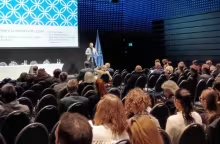
The first speech was given by Gábor Móczár, the Director-General of the Institute for National Heritage. He highlighted that alongside Fraknói, other bishops, including Mihály Horváth and Tihamér Tóth, are buried here as well. He reminded the attendees that the preservation of our heritage should not be limited to the transmission of intellectual heritage, but we must also preserve and maintain in proper condition the physical places where we can remember and pay our respects. This was the spirit in which Fraknói’s tombstone restoration took place.

Péter Tusor, speaking on behalf of the Fraknói Research Group, also delivered a speech. Among other points, he emphasized that the renowned Catholic historian's Roman scientific heritage has been embraced for two decades by the initiative at the Pázmány Péter Catholic University, with the support of the Cardinal, which was transformed into a research group with institutional status in 2012, supported by the Hungarian Academy of Sciences, and since 2017 has carried Fraknói Vilmos’ name.

László Péter Kollár, Secretary-General of the Hungarian Academy of Sciences, remembered Fraknói’s multifaceted relationship with the Academy, particularly his role in overseeing the entire administration of the Academy for ten years. He highlighted that his work was crucial for the modernization of the Academy and for the creation of the structure and role that allowed the institution, which had fallen into crisis in the 1860s but successfully overcame it, to become a defining force not only in historical science but also in other fields of science, remaining unchanged in structure until 1949.

Finally, Marie-Theres Arnbom, a historian and Fraknói Vilmos' distant relative from Vienna, shared her thoughts. In her speech (in German here; in Hungarian here), she emphasized that the memory of the distinguished family member has always been alive among the descendants of Fraknói’s sisters, Carolina and Terézia, who lived in Vienna. His grave in Budapest is regularly visited every year. Several relatives from the extended family attended the commemoration, including Christiane Arnbom, the 89-year-old granddaughter of Fraknói's sister Terézia, born in 1935.

After the speeches, the restored tombstone was blessed by Csaba Török, a canon and university professor, and the parish governor of the Esztergom Basilica, where Fraknói was ordained a priest in 1865. The commemoration concluded with the laying of wreaths. The family, the Institute for National Heritage, the Hungarian Academy of Sciences, the Fraknói Research Group, the Roman Catholic Diocese of Oradea, and the Municipality of Miskolc all placed flowers to show respect and homage.

The program continued at 5:00 PM with a scientific memorial session at the Central Seminary in Budapest, an important location in Fraknói's life, where he had been a student from 1858 to 1864. First, the musical piece Consolation No. 3 (Des-Dur) by Ferenc Liszt was performed by István Bácskai, the director of the Gondolat Publishing House, which publishes the Research Group’s books. Liszt composed this piece in 1849, and it was finalized in 1883. (Fraknói and the great composer often met at various salons in Pest.) After the music, members of the Fraknói Research Group read excerpts from the chronicles of Fraknói's last years.

At the opening, Péter Tusor, professor and leader of the Fraknói Research Group, greeted the participants of the full-capacity event. The session was then officially opened by Nándor Birher, Dean of the Faculty of Arts at Pázmány Péter Catholic University, who reflected on the two decades of research achievements of the Research Group and the Collectanea Vaticana Hungariae series, which includes the Dean's office as part of its accomplishments.

Vanda Lamm, Vice President of the Hungarian Academy of Sciences for Social Sciences, then gave a memorial speech on behalf of the Academy. She detailed Fraknói’s roles and offices within the Academy and his efforts to preserve his scientific legacy, which the Academy’s Lendület and supported research programs played a key role in. She noted that the achievements of the Fraknói Research Group are a significant confirmation that such programs are not only valid for natural and life sciences. After her speech, László Solymosi, a full member of the Academy and a former secretary of Fraknói’s division, praised the late historian-priest’s role in establishing Hungarian historical science, emphasizing the importance of the Lendület program for continuing Fraknói's Roman scientific heritage.

The Fraknói Research Group looks forward to much more from the expanded Lendület program, especially since, despite its results, it is the only research group not yet able to remain within the Academy's exceptional initiative for non-state-run higher education institutions.

The second part of the scientific session focused on the Fraknói Memorial Book published in the  Fraknói Emlékkönyv. Fraknói Vilmos (1843–1924) püspök, történész, a Magyar Tudományos Akadémia főtitkárának emlékezete Collectanea Vaticana Hungariae series (I/24). The volume, edited by Péter Tusor and Viktor Kanász, commemorates Fraknói Vilmos (1843–1924), bishop, historian, and Secretary-General of the Hungarian Academy of Sciences. The book contains expanded materials from the scientific memorial conference held in Nagyvárad as part of the X. Fraknói Academy.

Péter Zakar, Vice Rector of the University of Szeged and a 19th-century expert, outlined the panoramic landscape of the studies and started an engaging and meaningful discussion about Fraknói’s conservatism. Rev. Csaba Török, a theologian and priest from the ESzHF (Esztergomi School of Theology), also discussed the book in his usual enjoyable and convincing style. His written analysis is titled Fraknói Memorial Book. A Theologian's Reflections.

At the end of the event, Tamás Fedeles, co-leader of the Fraknói Research Group and Vice Rector of the University of Pécs, thanked everyone who contributed to the creation of the memorial book. Gábor Bükösdi also painted a portrait of Fraknói, which was presented during the commemoration. The portrait, based on a photograph taken between 1880 and 1883, depicts Fraknói as Secretary-General of the Academy and the founder of the Monumenta Vaticana Hungariae. It will be placed on the first-floor corridor of the Central Seminary near the portrait of his friend and mentor Arnold Ipolyi as part of the centenary closing ceremonies on February 26, 2025.

After the centenary memorial session, the Fraknói Research Group hosted a reception in the former chapter hall of the Central Seminary, once a Paulite monastery, to honor and remember their namesake.


Invitation to the Unveiling of the Restored Tombstone

The Poster for the Memorial Session

The Fraknói Memorial Book can be downloaded here

Magyar Kurír 1

Magyar Kurír 2


2024. December 6.

On 4 December 2024, Péter Tusor gave an interview on the M1 television channel, prompted by the Vatican meeting held that day between Pope Francis and the Prime Minister of Hungary. As head of the Fraknói Research Group, he sought to raise his analysis above the level of day-to-day political discourse, which had characterised the conversations preceding the broadcast. In a similar situation, he would have articulated the same considerations with regard to any Hungarian prime minister, regardless of party affiliation or worldview.

One day later, Viktor Kanász was interviewed on Kossuth Radio about the historical antecedents of the meeting and the distinctive features of diplomatic relations between Hungary and the Holy See. In this context, the Research Group’s senior research fellow referred to the symbolic significance of the Chain Bridge during the papal visit of 2023, as a link between East and West, and outlined the role and importance of the principal actors of papal diplomacy—legates and nuncios. He also emphasised that, during the struggles against the Ottoman Empire, Rome provided the Kingdom of Hungary with substantial diplomatic, financial, and military support.

At the end of the year, Miklós Jávor, external research associate of the Group, presented on M1 a key stage on the path toward the canonisation of Áron Márton, focusing on the moment when Pope Francis declared the bishop Venerable.


Péter Tusor's interview (18:20-tól)

Miklós Jávor's interview

2024. December 6.

On 8–9 December 2024, the international conference ANTEMURALE CHRISTIANITATIS. Central Europe and the Western Balkans as the Bulwarks of Christianity was held at the Várkert Bazár in Budapest, with the collaboration of the Fraknói Research Group. Three members of the Research Group delivered papers at the conference.
Gábor Nemes delivered a paper entitled “The ‘Ottoman Policy’ of the Apostolic See.” In his presentation, he examined the evolution of papal diplomacy towards the Ottoman Empire from the 1440s onward, with particular emphasis on the period following the fall of Constantinople in 1453. He demonstrated that resistance to Ottoman expansion became one of the central objectives of papal foreign policy, and that papal legates sent to the Kingdom of Hungary played a decisive role in organising and sustaining anti-Ottoman efforts. Drawing on several historical examples—from Cardinal Giuliano Cesarini’s pivotal involvement in the 1444 campaign to Juan de Carvajal’s contribution to the victory at Belgrade in 1456—he highlighted the legates’ political, military, and financial responsibilities. The lecture also addressed the activities of papal legates during the Jagiellonian period, focusing on their diplomatic missions, the management of papal subsidies, and their attempts to strengthen Hungary’s internal and external position in the face of an imminent Ottoman threat.

Tamás Kruppa presented his lecture “Diplomatic Relations between the Republic of Venice and the Ottoman Empire (1499–1540).” Framing his analysis between two Venetian–Ottoman wars, he explored the complex and multifaceted relationship between the two powers. He emphasised that Venice’s prosperity depended heavily on Levantine trade, which encouraged the Republic to pursue a policy of maintaining the status quo vis-à-vis the rising Ottoman Empire. At the same time, Venice’s mainland possessions drew it into the prolonged Italian Wars from 1494 onward, increasing its vulnerability to pressure from Istanbul. In contrast, Ottoman strategic objectives were clear: to limit Venetian influence in the eastern Mediterranean, particularly in the Balkans and Dalmatia, and to expand territorially by securing key islands in the Aegean–Adriatic region. Kruppa demonstrated how Venetian diplomacy oscillated between cooperation and confrontation, while Ottoman diplomacy combined pragmatism with strategic foresight, seeking simultaneously to avoid a two-front war and to prevent the formation of broader Christian–Muslim coalitions against the Empire.

Tamás Fedeles introduced the ongoing Bishops’ Lexicon (1458–1526) project in his lecture entitled “The Hungarian Ecclesiastical Elite at the Boundary between the Middle Ages and the Early Modern Period.” Beginning with the observation that two archbishops and five bishops perished on the battlefield of Mohács in 1526—representing nearly half of the Hungarian episcopate—he underscored the loyalty and sacrificial commitment of the ecclesiastical elite to the defence of the realm. His presentation outlined the aims and preliminary results of a long-term research programme that seeks to produce modern scholarly biographies of the seventy-five prelates who headed Hungary’s fourteen dioceses between 1458 and 1526, in preparation for the battle’s 500th anniversary. Beyond biographical reconstruction, the project also examines the contemporary condition of the dioceses themselves, supported by cartographic visualisation, and offers a prosopographical analysis of the late medieval Hungarian episcopate, addressing questions of origin, education, careers, patronage networks, and royal appointment policies.
 

(Pictures: Kálmán Tábori and Viktor Kanász)

2024. December 15.

Over the past years, the Fraknói Research Group has maintained its nearly two-decade-long active collaboration with the Istituto Nazionale di Studi Romani and the Papal and Central European Research Center of the University of Viterbo. The depth of this cooperation is reflected in joint research efforts, the organization of scholarly conferences (2018 Budapest, 2019 Rome,  2021 Rome2022 Rome2023 Rome2024 Rome), and the publication of a series of volumes by prestigious international publishers.

Within the framework of this collaboration, the Istituto Nazionale di Studi Romani, in partnership with the Fraknói Research Group, other Roman and Italian academic institutions, and the Faculty of Theology of Université Laval in Quebec, organized the conference titled Collegi per stranieri a Roma dalla Grande guerra a oggi on December 13, 2024, in a hybrid format. From the Hungarian side, two former students of the Collegium Germanicum et Hungaricum addressed Central European and Hungarian perspectives, while Péter Tusor presented a brief evaluation of the three years of joint research under the title Saluti finali a conclusione di tre anni di ricerca.

The proceedings of the scientific symposium can be viewed [here]. The editing of the conference papers into a volume has already commenced.